June 23, 2011

Elephants

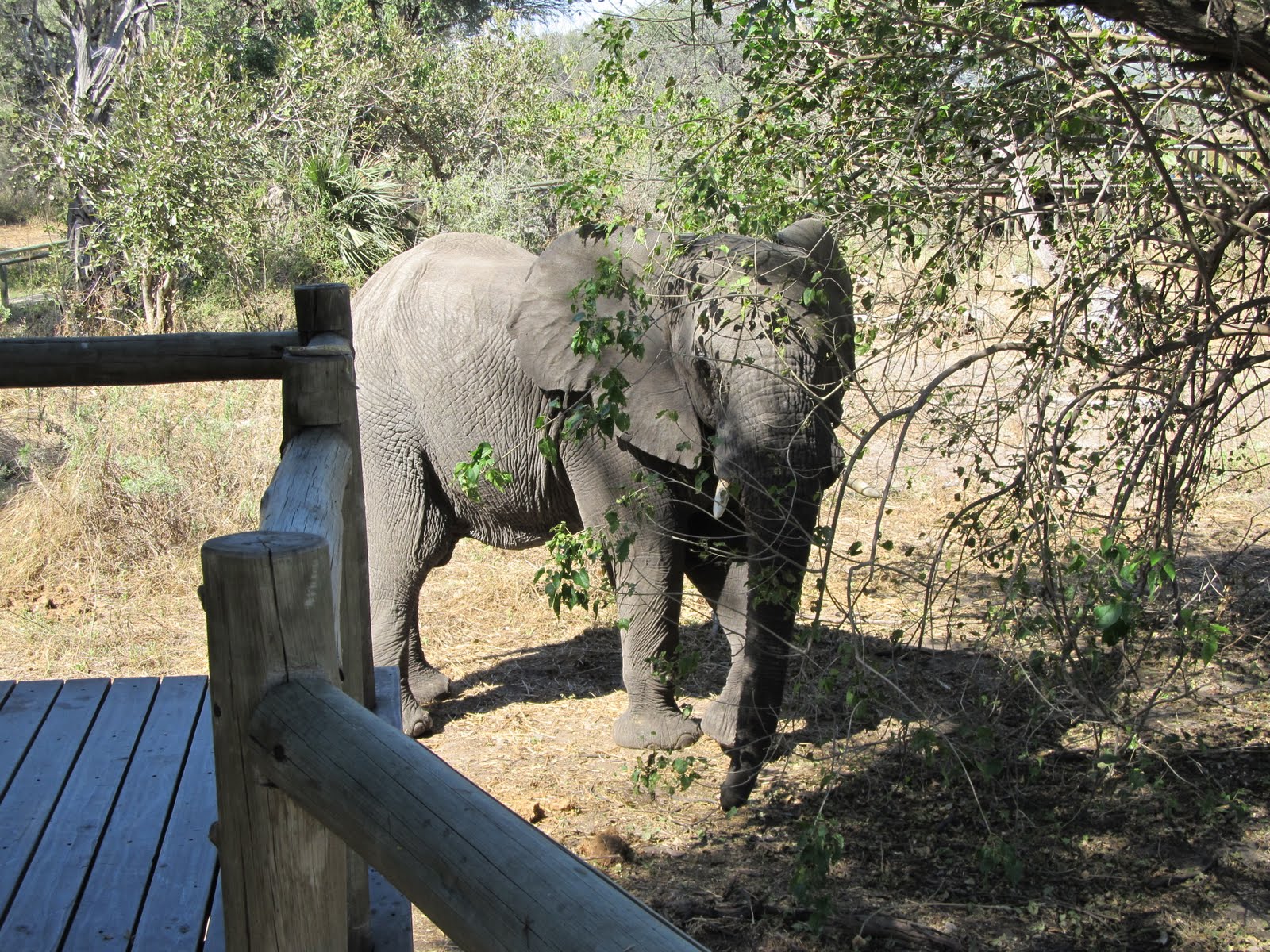
One up close and personal encounter was with an elephant ambling quite close to our cabins on the Okavango Delta.
 In Zimbabwe, man-made water holes are much appreciated.

 An elephant shakes a tree to make tasty pods fall to the ground.
 
Elephant dung repels insects when burned, a valuable tsetse fly deterrent in Zambia.  Another guide told us his wife drank elephant dung diluted in water to ease delivery pains - she swears by it!

On the Chobe River, elephants swim out to eat grass. When one arrives, it greets the other elephants by intertwining trunks before it moves on to feed.  My big thrill was dozing off in the sunshine on our cruise and then waking up to see an elephant swimming next to me.
Our guides tried to gently broach the subject of "culling" elephants where they are overpopulated and destroying the natural environment.  We did not want to hear any of it. 
 

Hippopatami


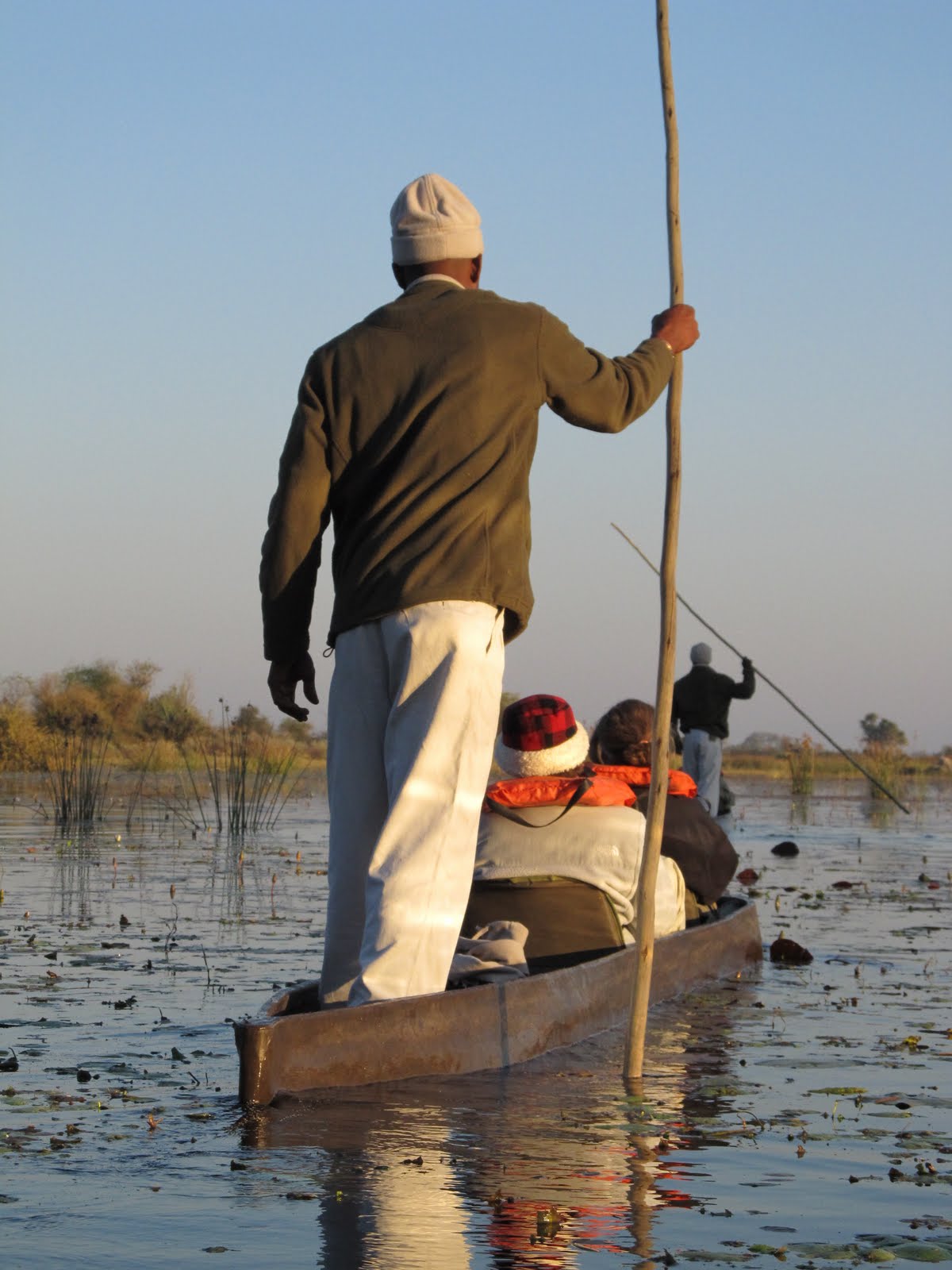
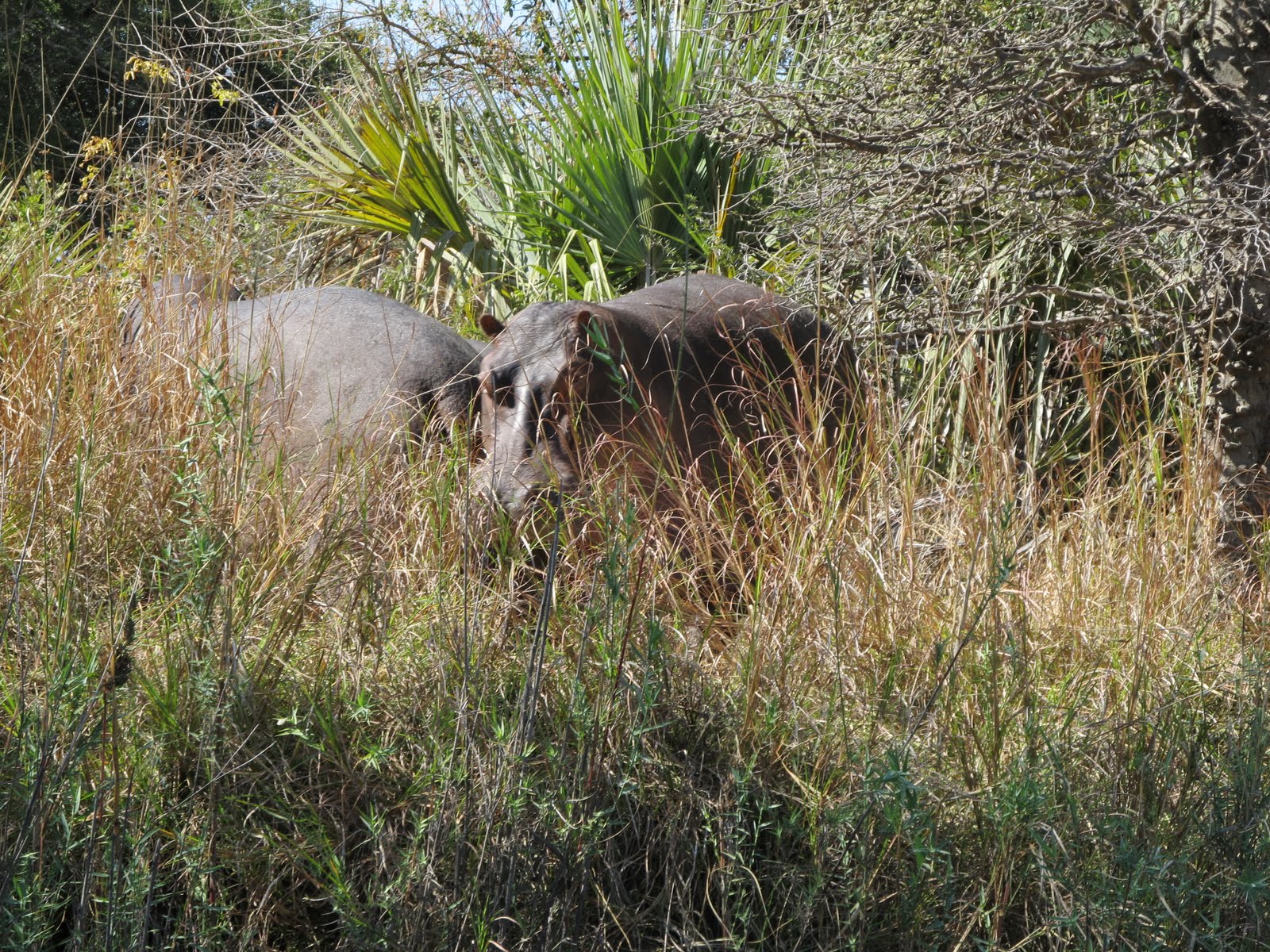
Hippos are one of the most dangerous animals in Africa and can easily outrun a human (can you run 19 mph?) despite weighing between 3,000 and 4,000 pounds. At our camp in Zambia, they came up out of the river next to my cabin at night to forage for food. But our most up close and personal encounter was by mokoro, the traditional dugout canoe used on the Okavango Delta.
We approached a large pod and got so close, we could photograph the bristles on this one's back.
The little one was curious but the bull was furious!

On several river cruises, we saw hippos swimming with birds on their back who tried to keep the hippos bug-free. The hippos would scramble up the bank to get out of our way.
 
 But they didn't seem to mind the crocodiles.
.
A pod of hippos gathered by the man-made watering hole.
This ailing mother hippo laid down in the middle of the road.  Her calf will stay with her for days until he must return to the river and eat.

June 22, 2011

African Wild Dogs aka Painted Dogs

Our Okavango Delta guides were absolutely thrilled to see this pack of 17 or 18 (well-camouflaged) African Wild Dogs.  Our guides claimed with great admiration that a pack of hunting dogs never loses the prey it targets and always make the kill.  BBC says these dogs usually hunt at dawn or dusk, or at night if the moon is full.  They hunt by sight rather than smell.  Reaching speeds of 55 mph they chase their prey until it tires and can disembowel their prey as it runs.
You can see why they are also called Painted Dogs. They are endangered and population estimates range from 3,000 to 5,500. In addition to havoc wreaked by humans, entire packs can be wiped out by rabies and distemper. Only the alpha male and alpha female mate, so litters are limited.
Several of the dogs wore collars which enable researchers to track them. Our guides cannot track the dogs but when they saw the research vehicle in the area, they knew these dogs had to be close. 
These dogs play like my Guapo and Darla, and I even saw one dog grab the other dog by its tracking collar and pull (Guapo knows exactly what that feels like.)

April 18, 2011

HATS Carlsbad Caverns & Guadalupe National Parks


Hugo of Houston Area Trails and More (HATS) organized a camping trip with us and his hiking group from the Bay Area (California).  Hugo and others drove in all of the cooking equipment and much of the food supplies from Houston.  Ardis and I flew into El Paso, spent a night in a comfortable Holiday Inn Express, bought supplies from WalMart and drove about an hour to Guadalupe Mountains National Park to set up camp.


We all drove into New Mexico to visit Carlsbad Caverns.  Lucky for us it was "National Park Day" and admission was free.  It was also late, the main elevators were out of commission and we had to hustle to the natural entrance.  


We headed down, way down ...
....  passing through room after room with amazing stalagmites, stalactites and other eerie sorts of formations (captured beautifully by my fellow campers).


Sadly, this was not bat "season" and we missed seeing a million bats exit the caverns at sunset. Instead, we relaxed back at our campsite.

Comfortable by day ...

 ... but a bit chilly in the evening.

The next day we got ready for our big challenge - hiking up Guadalupe Peak, the tallest mountain in Texas at 8,751 feet.  We "only" had to hike up a net 4,000 feet (8.4 miles round-trip in 4.5 hours).  


 Success (and sunburn) ! 


After a hard night of celebrating, we packed up camp and drove back to El Paso.  We drove along the Sonoma Mission Trail and enjoyed some Tex Mex before flying home.


January 30, 2011

Big Bend National Park

Kris planned this trip to test his endurance after his double-bypass surgery.  Big Bend National Park is one of the least visited National Parks, not because it has little to offer but because it is so remote.  It was a 14-hour drive each way (broke journey both ways with an overnite in San Antonio) between Houston and Big Bend.   Once we got off I-10, it was slow going on curvy roads amidst starkly beautiful scenery.

We stayed at Chisos Lodge inside the park.  The rooms were basic but the location stunning.  We reveled in this view on the scenic trail and at dinner every evening.  The nights and mornings were terribly cold but the mid-day temperatures were almost intolerably hot. 

We spent two full days in the park.  Each day, Kris planned a short hike and a more challenging hike.  The first day, we hiked "Window View" from the campground - 4.4 miles round-trip with a 500-foot elevation gain.


 I was so busy taking pictures, I almost tripped over this javelina.
In the afternoon, we hiked Boquillas Canyon - 1.4 miles RT with 40 foot elevation gain.  The Rio Grande separates Big Bend from Mexico and the water was so shallow you could easily cross over.  However, there were numerous warning signs citing $5,000 fines should you seriously think about doing so.  Along the trail were wire animals, walking sticks and other items for sale with prices - honor system for leaving the cash.  We were serenaded by a musician across the river who pointed out a can on our side where we could leave a tip if we were so inclined. 

The next morning we started our day with a short hike through Santa Elena Canyon


On our return, we visited Castolon to learn a bit about the military and ranching history in this area.  Kris was feeling strong and eager to embark on our most difficult hike, Lost Mine Trail.  At 4.8 miles round-trip with an 1100-foot gain and climbing temperatures, it was a struggle.   Although we took no pictures of the far-reaching vistas, we were extremely pleased with ourselves when we reached the summit.  Kris proved that his heart was now strong.  

June 25, 2010

Peru: Overview of the Highlands and the Amazon


What do you visit in Peru when you have already seen Machu Picchu and the Nazca Lines?


Teresa embraced that challenge when Jan and I visited her during the South American winter month of June.


We visited pre-Inca ruins outside Lima (Pachacamac and Caral), Lake Titicaca (Floating Islands), Sillustani (Burial Towers), Colca Canyon (Patapampa Pass ~16,000 feet, Andean Condors and Skull Candy) and Arequipa (including Santa Catalina and Juanita the "Ice Maiden") Then Teresa sent us on a short ecoadventure along the Amazon, over the rainforest and within petting distance of Charlita who is a capybara (largest rodent in the world)