June 27, 2011

Life in the Camps

 We drove from Victoria Falls to our camp in Chobe National Park. After that, we flew in small (often very small) planes to our camps. The bush pilots were usually young locals but one came from Canada. Our international flight from Botswana to Zambia required a copilot and we got a South African Airways commercial pilot who was moonlighting for some extra cash.
We stayed 3 nights in each of 4 camps.  These camps catered exclusively to OAT travelers and thus provided the amenities and services soft adventure American travelers love.  Clean comfortable tent cabins with ensuite facilities, hot showers, and a means to charge our cameras and kindles.  Hot coffee and breakfast provided first thing in the morning.  Plenty of water, snacks, delicious meals and a well-stocked bar meant no one ever went hungry or thirsty.  At lunch and dinner, the head chef and other staff members were introduced by name. Daily laundry service was a dream and always returned artfully wrapped with straw ribbon.  Each stay ended in a night of entertainment by the talented staff. Most amazing of all, despite the fact that new groups arrived constantly, the staff always maintained their enthusiasm and made you feel welcome.

Every camp provided many game drives, plenty of wildlife spotted by expert guides and happy hour at sunset. Great care was taken to keep us safe and informed of what to do in the event of an emergency.   

While every camp maintained consistency in quality of accomodation and services, each camp also tried to distinguish itself with a memorably different experience.  OAT took great care to place us in  four unique landscapes. 

Baobab Lodge, Chobe NP, Botswana: 6/18/11 - 6/21/11

I bought a basket woven byGrace

We launched our river cruise from a nearby luxury lodge.

Wilderness Camp, Okavango Delta, Botswana: 6/21/11 - 6/24/11

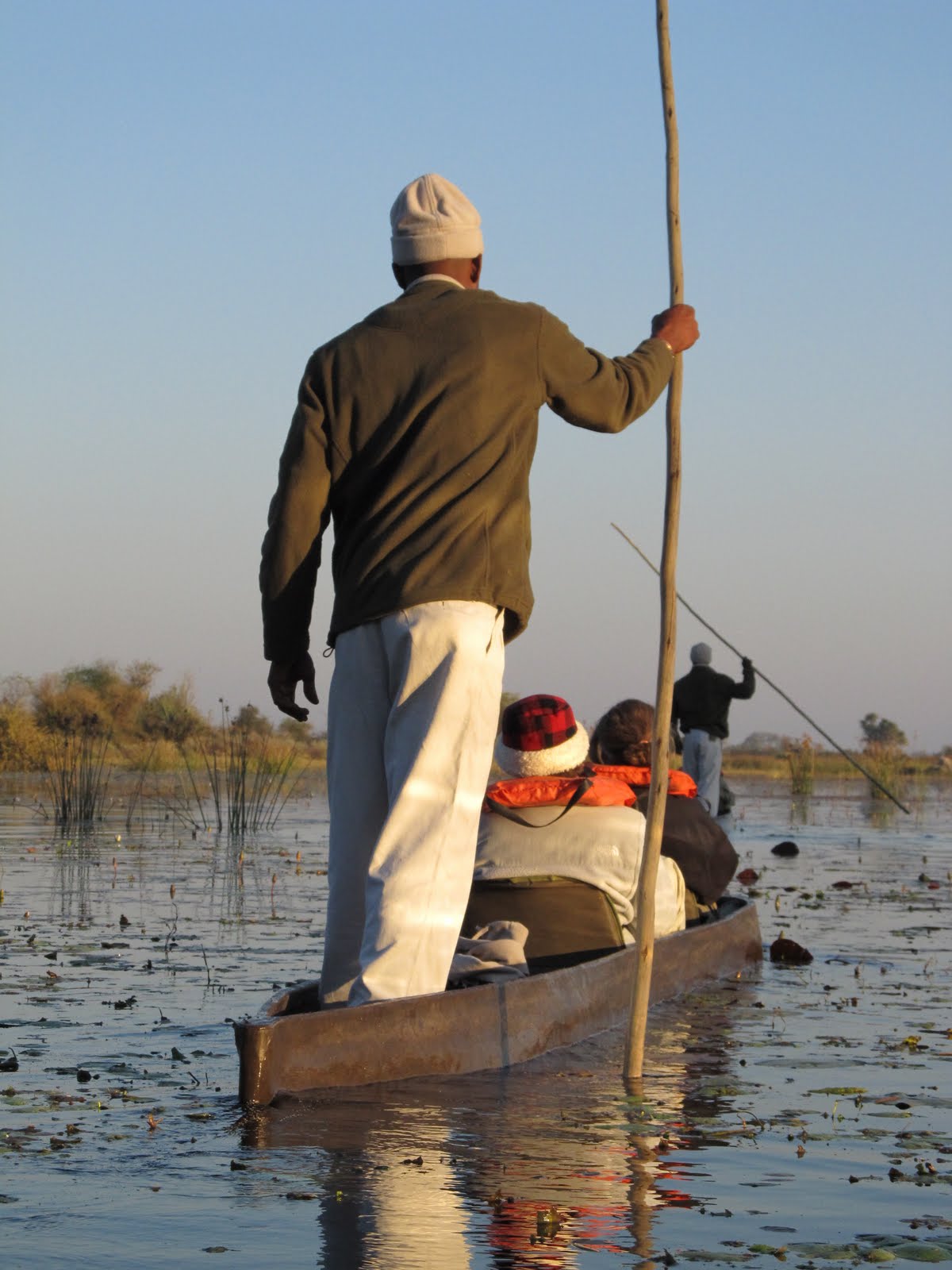
We travelled to the hippos by mokuru canoe.

Lufupa Camp, Kafue NP, Zambia: 6/24/11 - 6/27/11

The camp is at the confluence of the Lufupa and Kafue rivers, and I went on every river cruise offered. 
This was the only camp offering tsetse flies.  The guides burned elephant dung as a deterrent and we made sure we applied our DEET.
We were allowed to go on night drives and spot a leopard.

Linkwasha Lodge, Hwange NP, Zimbabwe: 6/27/11 - 6/30/11 
 
 My cabin was so remote from the main camp that I had to be driven there at night and escorted to my door.
Man-made water holes for animals are formed by pumping water up and through the Kalahari Desert sands.  The water is so purified that our water at camp could be drunk straight from the tap.
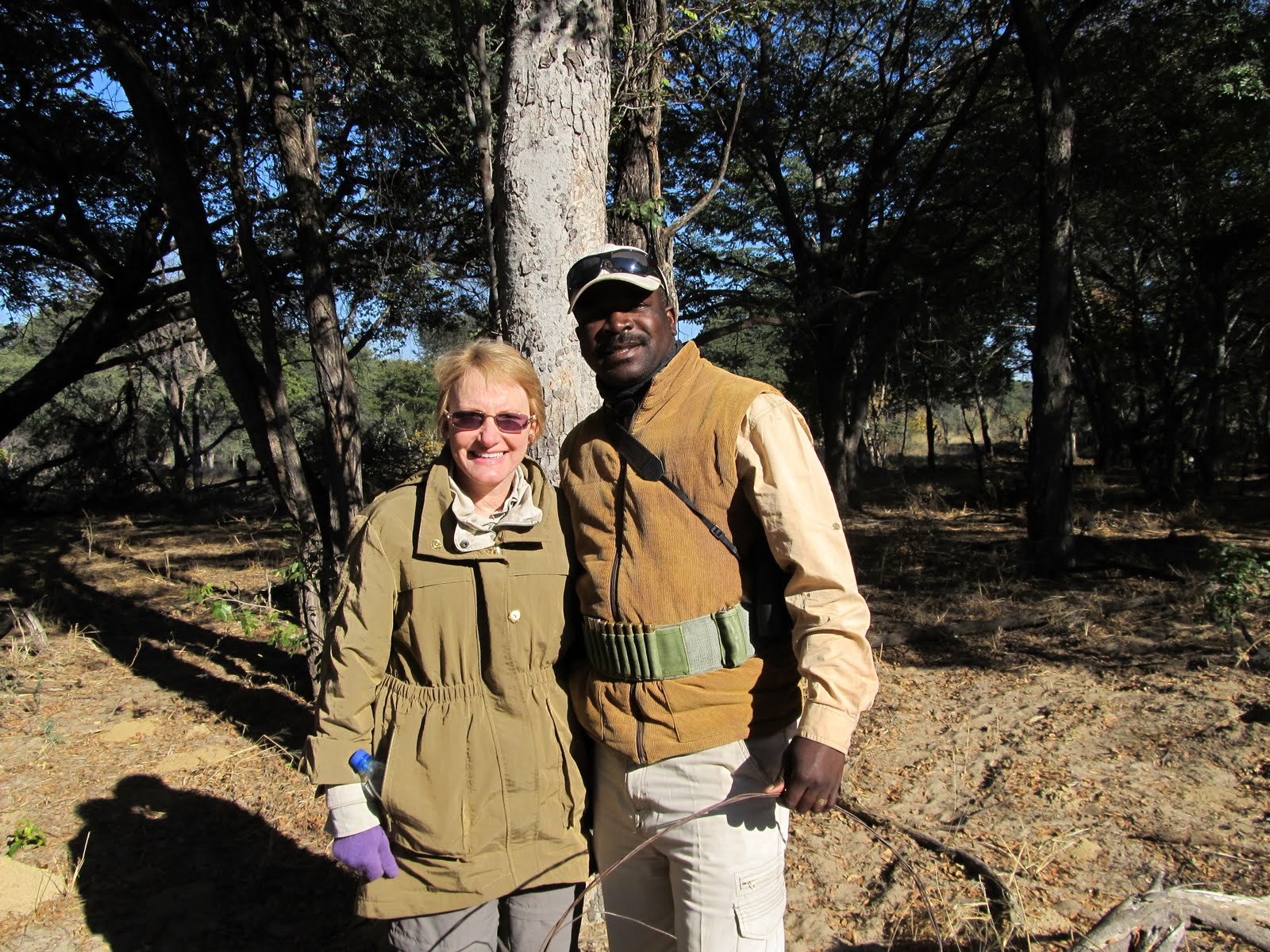
This camp offered bush walks with an armed guide.  He showed us how to approach a herd of wildebeest without being noticed. 

June 26, 2011

Big Five: Finally Saw My Leopard

The "Big Five" are supposedly the five most dangerous mammals: Lion, Cape Buffalo, Elephant, Rhino and Leopard.   
Lion, Cape Buffalo, and Elephant were plentiful. 
 No Rhinos on this trip but I had seen several on an East African safari in 1974.  Spotting this leopard at night was a fantastic way to complete my sightings of all "Big Five."

June 25, 2011

Cheetahs - Hunting and Posing

In Kafue National Park (NP), we spotted two cheetahs walking purposefully down the road.  One disappeared into the bush almost immediately while the other looked intently into the bush.
Suddenly the cheetah shot into the bush.  Our guides went quiet and then began talking to each other.  Finally, one turned back to us and said  "We think they've made their kill - let's go see."
Off into the bush we drove and when we reached the thornbush, we could see and hear a cheetah chomping away on fresh puka.
Below is the 3rd brother who participated in the hunt, pacing nervously in our presence.
In Hwange National Park (Zimbabwe) we stumbled upon a cheetah who was a photographer's dream.  He was conveniently waiting for us by the side of the road.
As we approached, he yawned.
 Ambled over to a tree
Sharpened his claws and sprayed said tree
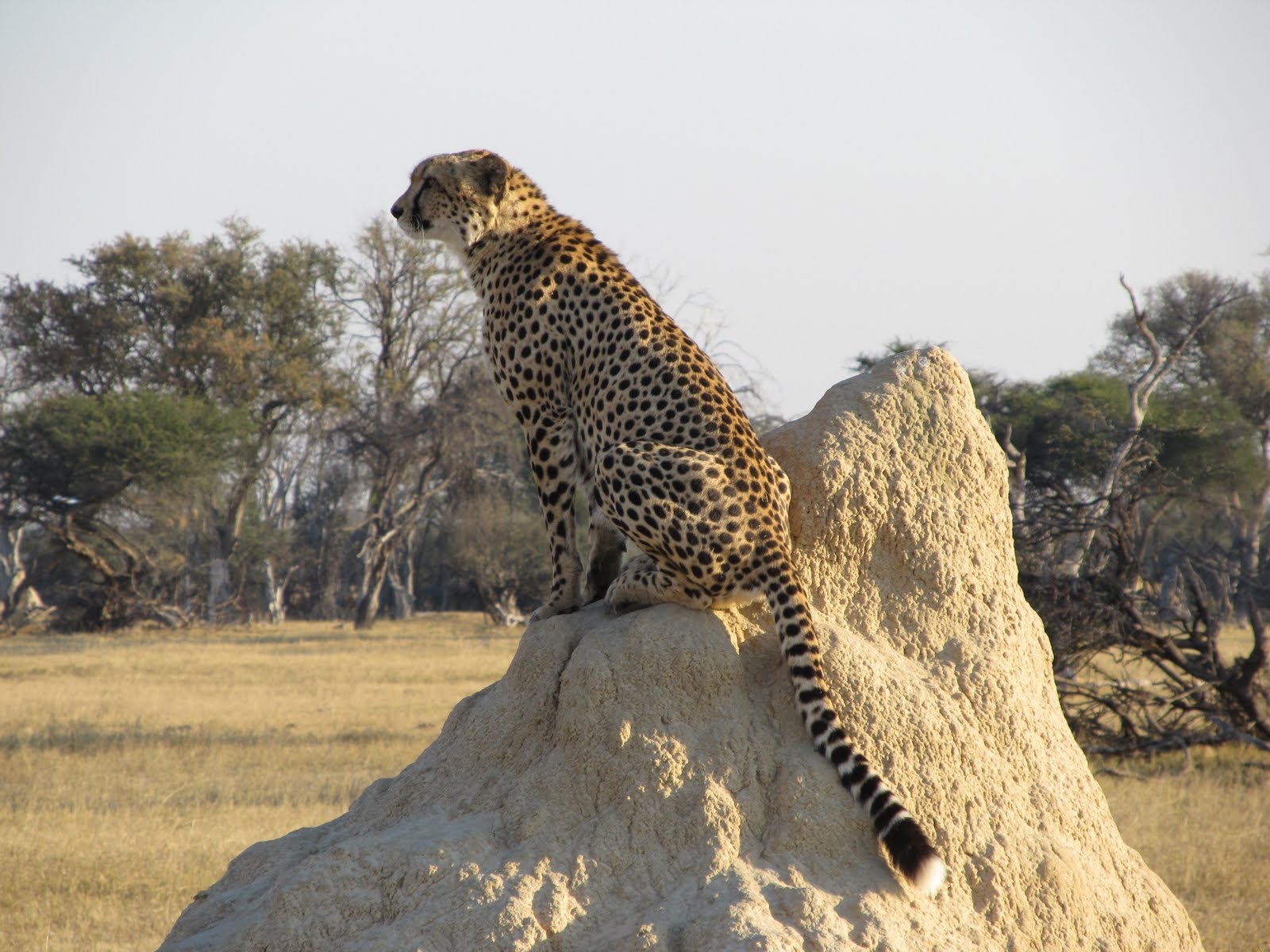
Then proceeded to hop atop a termite mound where he moved his head from side to side, pausing so that the most inept of photographers could capture a great shot. 
Happily we each complied by taking at least 50 photos of that photogenic fellow. 

June 23, 2011

Elephants

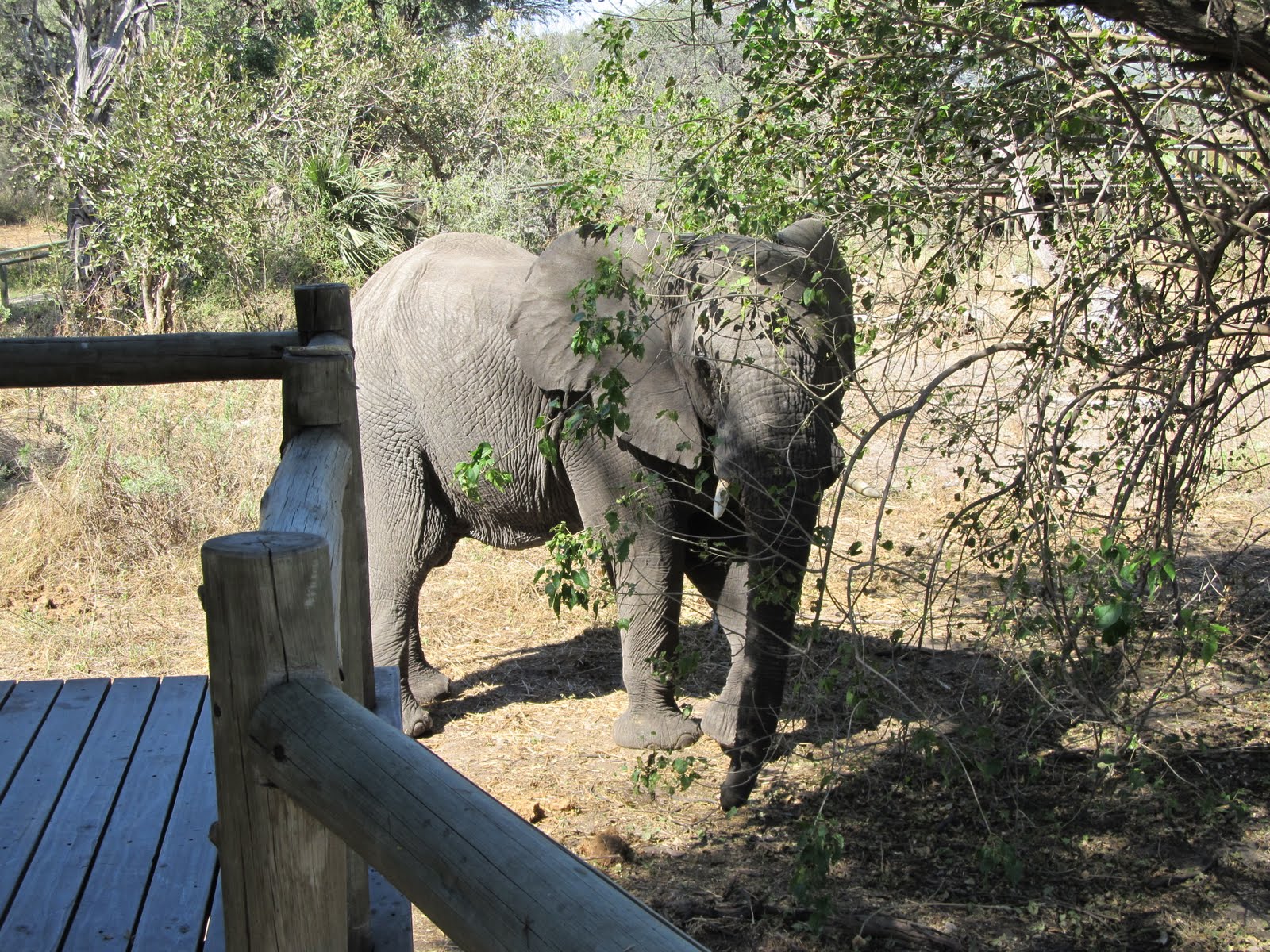
One up close and personal encounter was with an elephant ambling quite close to our cabins on the Okavango Delta.
 In Zimbabwe, man-made water holes are much appreciated.

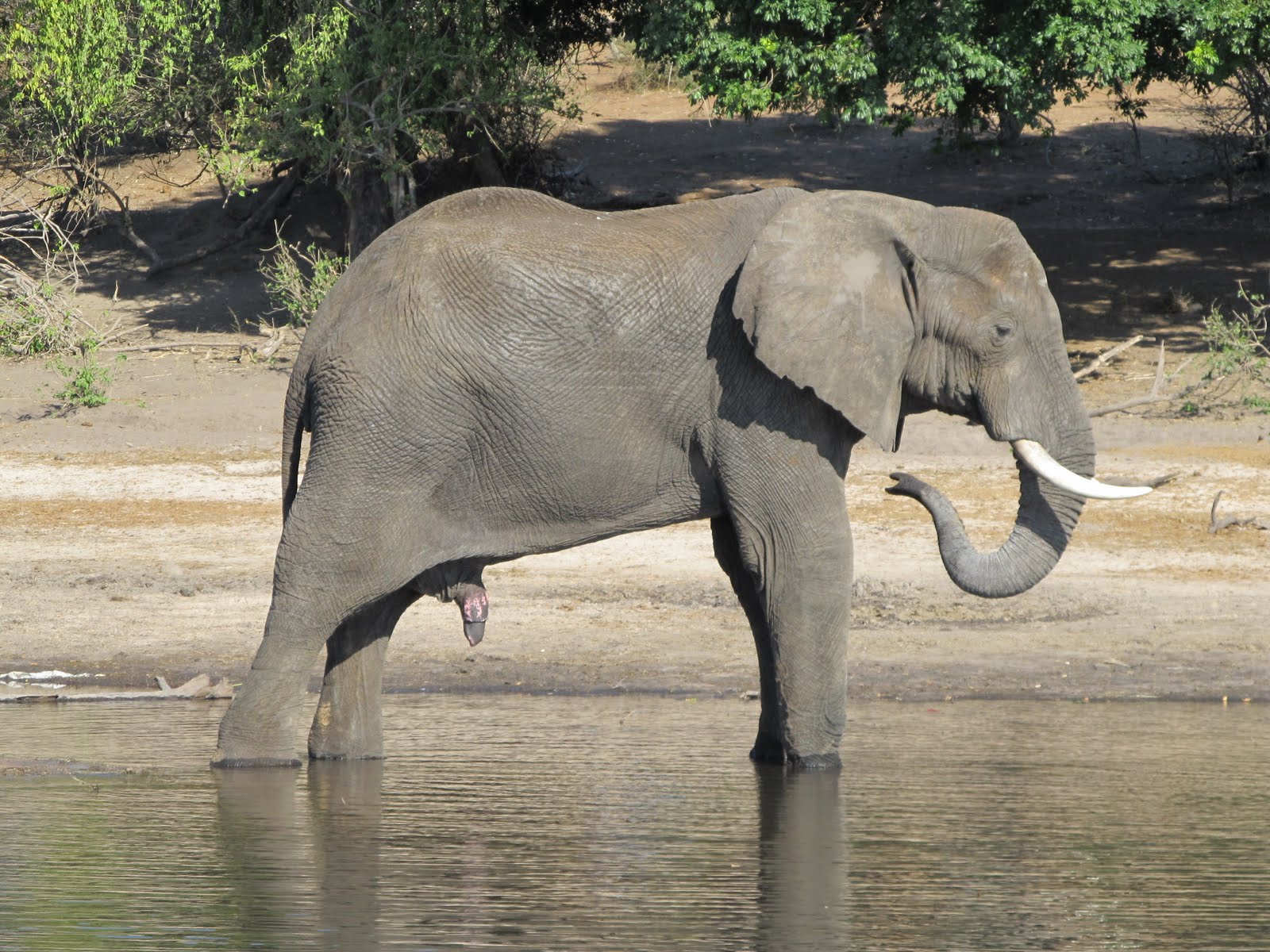
 An elephant shakes a tree to make tasty pods fall to the ground.
 
Elephant dung repels insects when burned, a valuable tsetse fly deterrent in Zambia.  Another guide told us his wife drank elephant dung diluted in water to ease delivery pains - she swears by it!

On the Chobe River, elephants swim out to eat grass. When one arrives, it greets the other elephants by intertwining trunks before it moves on to feed.  My big thrill was dozing off in the sunshine on our cruise and then waking up to see an elephant swimming next to me.
Our guides tried to gently broach the subject of "culling" elephants where they are overpopulated and destroying the natural environment.  We did not want to hear any of it. 
 

Hippopatami


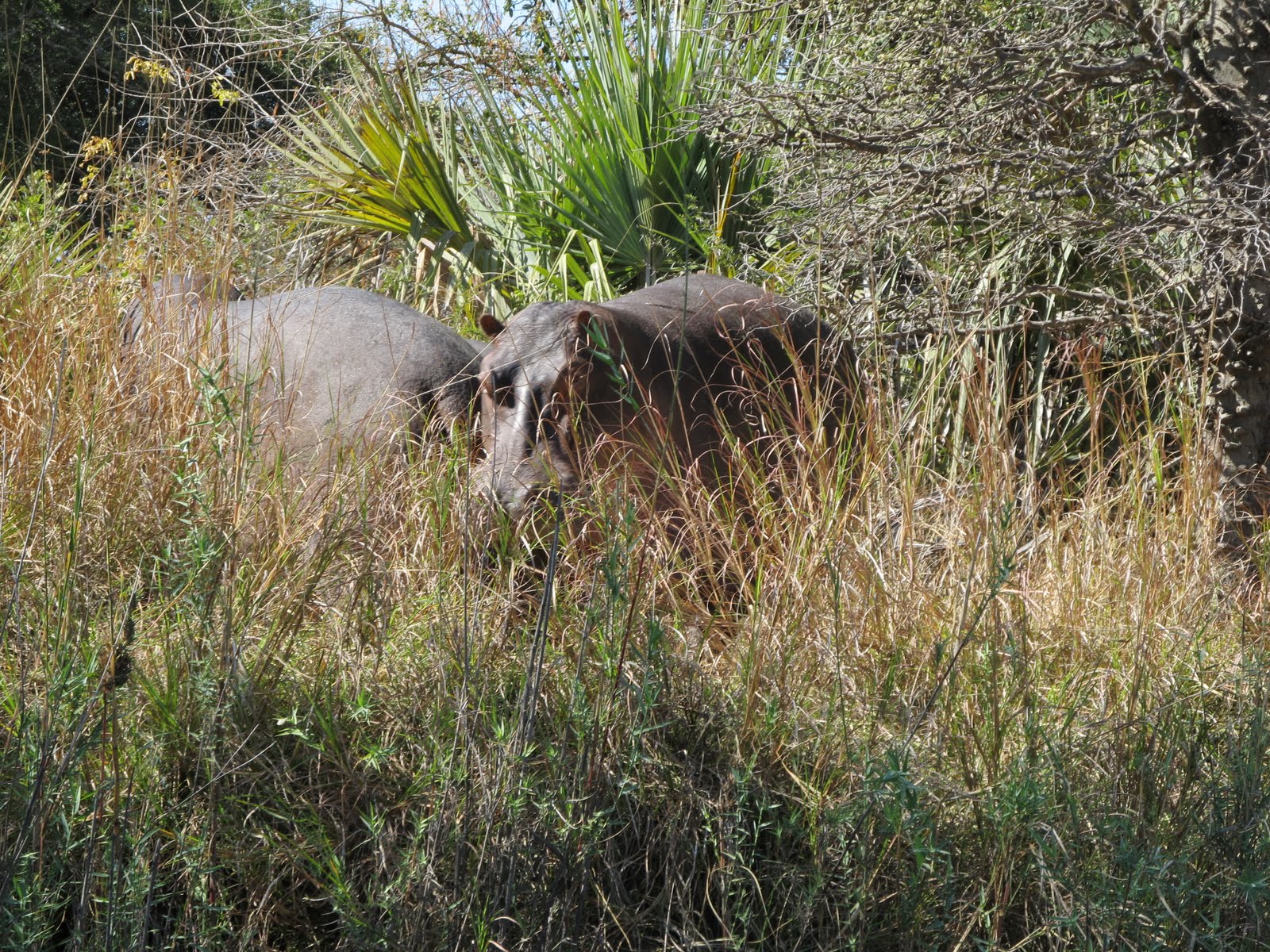
Hippos are one of the most dangerous animals in Africa and can easily outrun a human (can you run 19 mph?) despite weighing between 3,000 and 4,000 pounds. At our camp in Zambia, they came up out of the river next to my cabin at night to forage for food. But our most up close and personal encounter was by mokoro, the traditional dugout canoe used on the Okavango Delta.
We approached a large pod and got so close, we could photograph the bristles on this one's back.
The little one was curious but the bull was furious!

On several river cruises, we saw hippos swimming with birds on their back who tried to keep the hippos bug-free. The hippos would scramble up the bank to get out of our way.
 
 But they didn't seem to mind the crocodiles.
.
A pod of hippos gathered by the man-made watering hole.
This ailing mother hippo laid down in the middle of the road.  Her calf will stay with her for days until he must return to the river and eat.

June 22, 2011

African Wild Dogs aka Painted Dogs

Our Okavango Delta guides were absolutely thrilled to see this pack of 17 or 18 (well-camouflaged) African Wild Dogs.  Our guides claimed with great admiration that a pack of hunting dogs never loses the prey it targets and always make the kill.  BBC says these dogs usually hunt at dawn or dusk, or at night if the moon is full.  They hunt by sight rather than smell.  Reaching speeds of 55 mph they chase their prey until it tires and can disembowel their prey as it runs.
You can see why they are also called Painted Dogs. They are endangered and population estimates range from 3,000 to 5,500. In addition to havoc wreaked by humans, entire packs can be wiped out by rabies and distemper. Only the alpha male and alpha female mate, so litters are limited.
Several of the dogs wore collars which enable researchers to track them. Our guides cannot track the dogs but when they saw the research vehicle in the area, they knew these dogs had to be close. 
These dogs play like my Guapo and Darla, and I even saw one dog grab the other dog by its tracking collar and pull (Guapo knows exactly what that feels like.)